
Introduction
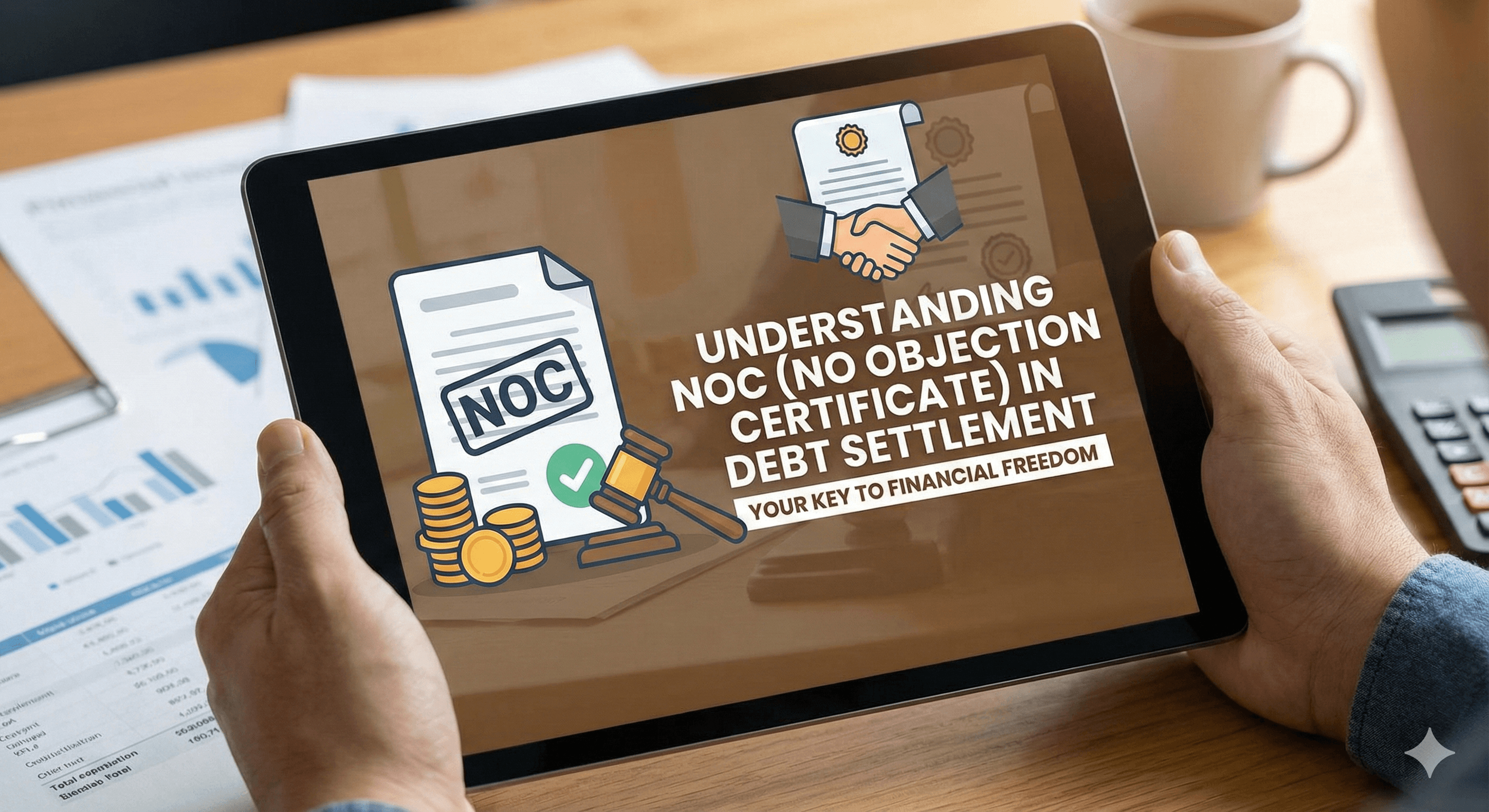
When you complete a debt settlement, obtaining a No Objection Certificate (NOC) from your lender is one of the most critical steps in the process. This document serves as official proof that your debt has been fully settled and that the creditor has no further claims against you. Understanding NOC is essential for anyone going through debt settlement.
What is a No Objection Certificate (NOC)?
A No Objection Certificate (NOC) is an official document issued by a lender or creditor confirming that:
- All outstanding dues have been cleared
- The account has been closed
- The creditor has no further claims or objections against the borrower
- The debt settlement is complete and final
In essence, it's a "clean chit" that proves you've fulfilled your financial obligations and are free from any further liability related to that specific debt.
Why is NOC Important?
1. Legal Protection
An NOC provides legal protection against future claims. If a creditor later claims you still owe money, the NOC serves as proof that the debt was settled. This protects you from:
- Future collection attempts
- Legal action for the same debt
- Credit bureau reporting errors
- Disputes about settlement completion
2. Credit Report Accuracy
An NOC helps ensure your credit report accurately reflects that the debt is settled. You can use it to dispute any incorrect information on your credit report, such as accounts still showing as "outstanding" or "overdue" after settlement.
3. Future Financial Transactions
When applying for new loans or credit cards, having NOCs for settled debts demonstrates financial responsibility and completion of obligations. Some lenders may require NOCs before approving new credit applications.
4. Peace of Mind
An NOC provides psychological closure and peace of mind, confirming that you've successfully resolved your debt and can move forward without worry.
When Should You Get an NOC?
You should obtain an NOC:
- After Full Payment: Once you've made the final settlement payment
- Before Closing: Ideally, as part of the settlement agreement before making payment
- Immediately After Settlement: Don't delay - request it right after settlement completion
- For Each Creditor: Get a separate NOC for each debt you settle
What Should an NOC Contain?
A proper NOC should include the following information:
- Borrower Details: Your full name, address, and account number
- Loan/Settlement Details: Original loan amount, settlement amount paid, and settlement date
- Clear Statement: Explicit statement that all dues are cleared and no further claims exist
- Account Status: Confirmation that the account is closed
- Creditor Information: Official letterhead, authorized signatory, and contact details
- Date and Seal: Date of issuance and official stamp/seal
- Reference Number: Unique reference number for tracking
How to Obtain an NOC
Step 1: Complete Settlement Payment
First, ensure you've completed the settlement payment as agreed. Keep all payment receipts and bank statements as proof.
Step 2: Request NOC in Writing
Send a formal written request to the creditor asking for the NOC. Include:
- Your account number and personal details
- Settlement amount paid and date
- Request for NOC issuance
- Your contact information
Step 3: Follow Up
If you don't receive the NOC within 15-30 days, follow up with the creditor. Keep records of all communications.
Step 4: Verify the NOC
Once received, verify that all information is correct and the document is properly signed and stamped.
Including NOC in Settlement Agreement
The best practice is to include NOC issuance as a condition in your settlement agreement before making payment. This ensures:
- Creditor is legally bound to provide NOC
- You have leverage (payment) to ensure compliance
- Clear timeline for NOC delivery
- Protection if creditor refuses to issue NOC
Your settlement agreement should state: "Creditor agrees to issue a No Objection Certificate within [X] days of receiving the settlement payment."
What If Creditor Refuses to Issue NOC?
If a creditor refuses to issue an NOC after settlement, you have several options:
1. Review Settlement Agreement
Check if the settlement agreement mentions NOC issuance. If it does, the creditor is legally obligated to provide it.
2. Escalate Within the Organization
Contact higher management or the legal department of the creditor. Sometimes lower-level employees may not be aware of NOC requirements.
3. File a Complaint
File a complaint with:
- RBI Banking Ombudsman (for bank loans)
- Consumer forums
- Regulatory authorities
4. Legal Action
If the settlement agreement included NOC issuance, you may have grounds for legal action to enforce the agreement.
5. Document Everything
Keep all payment receipts, settlement agreements, and communication records. These serve as proof of settlement even without an NOC.
NOC for Different Types of Debts
Personal Loans
Banks and NBFCs typically issue NOCs for personal loan settlements. The process is usually straightforward if settlement terms are met.
Credit Cards
Credit card companies may issue settlement letters or closure certificates instead of traditional NOCs. These serve the same purpose.
Business Loans
Business loan NOCs are crucial for company records and future business credit applications. Ensure it's on company letterhead if applicable.
Home Loans
For home loan settlements, NOCs are essential for property-related transactions and removing liens on property.
Using NOC to Update Credit Reports
After receiving your NOC:
- Check your credit report from all credit bureaus (CIBIL, Experian, Equifax, CRIF)
- If accounts show incorrect status, dispute them using the NOC as proof
- Submit NOC copies to credit bureaus along with dispute forms
- Follow up to ensure corrections are made
Storing and Safeguarding NOCs
NOCs are important legal documents. Safeguard them by:
- Making multiple copies (physical and digital)
- Storing originals in a safe place
- Keeping digital copies in cloud storage
- Maintaining a file with all settlement documents
- Never discarding NOCs - you may need them years later
Common NOC Issues and Solutions
Issue: Delayed NOC Issuance
Solution: Follow up regularly, escalate to management, and refer to settlement agreement terms.
Issue: Incorrect Information on NOC
Solution: Request correction immediately. Don't accept NOCs with errors.
Issue: Creditor Claims NOC Not Required
Solution: Insist on NOC as it's your legal right after settlement. Refer to industry standards and regulations.
Issue: Lost or Misplaced NOC
Solution: Request a duplicate from the creditor. Keep digital copies to prevent this issue.
Working with Settlement Professionals
Professional settlement companies can help ensure NOC issuance by:
- Including NOC requirements in settlement agreements
- Following up with creditors on your behalf
- Handling disputes and escalations
- Ensuring proper documentation throughout the process
Conclusion
A No Objection Certificate is not just a piece of paper—it's your legal protection and proof of debt resolution. Never consider a debt settlement complete without obtaining a proper NOC. Whether you're handling settlement yourself or working with professionals, make NOC issuance a non-negotiable part of your settlement agreement.
Remember, an NOC protects you from future claims, helps maintain accurate credit reports, and provides the peace of mind that comes with knowing your debt is truly resolved. Don't settle for anything less than a proper, legally valid NOC from your creditors.